
The Women of 1066
Stories of the Battle of Hastings are often dominated by those of the men of war. But careful reading reveals that women also played important roles before and after the battle. At this time it was rare for individual women to appear in the historical records and where they do, it is generally in their roles as mothers, wives or sisters of important men.
Many women (particularly queens, who were the best recorded) held significant power and influence behind the scenes as advisors to their husbands, supporters of their sons and the voice of religious moderation. Here we discuss four such women who wielded power behind the throne in 1066.
Queen Emma (985–1052)
The kingmaker
Queen Emma, mother of King Edward the Confessor, had been dead for 14 years at the time of the Conquest, but during her reign, she did a lot to set up the political situation surrounding 1066.
Emma was the second wife of Æthelred the Unready (reigned 978–1013, 1014–16), who already had several sons. When her son Edward was born, he was not expected to become king. However, Emma campaigned for him to be named heir over his elder half siblings. Following her husband’s death during the Danish invasion of 1016, she negotiated her own marriage to the invader Cnut, keeping her existing children within the royal succession. Edward became King of England far more because of his mother’s position as Cnut’s queen than because his father had been king before him.
So successful was Emma in positioning herself as a conduit for royal kingship, eliminating Æthelred’s other heirs, that Edward the Confessor chose not to name any of his father’s relatives as his successor. He turned instead to his wife’s brother Harold, again allowing power to pass through the female line.
Queen Edith (1025–75)
Diplomat and patron of the arts
Wife of King Edward the Confessor and sister to King Harold, Queen Edith, also known as Edith of Wessex, was one of only two women depicted in the Bayeux Tapestry and it has been suggested, by the historian Carola Hicks, that she is a strong candidate for being the patron of the tapestry.
Edith was aware that controlling the historical and political narrative was key to her personal survival after 1066. Although the commissioning of the tapestry is debatable, what is certain is her role as patroness of a book on the life of her husband, King Edward. In it she presents him as saintly, parallelling her own role as queen in the same light.
At this point all the male figures who might have protected her, in particular Harold and her other siblings, had been killed during the Conquest, and Edith was left extremely vulnerable. So Edith promoted the cult of Edward the Confessor, in effect making God her protector. This was a shrewd move, as the Domesday Book of 1086 reveals that she was one of very few English landowners to keep all their lands – most English nobility were killed or sent into exile.
Matilda of Flanders (c.1031–1083)
The first Queen of England
Matilda of Flanders was Queen of England and wife of William the Conqueror. She was the first consort in England to be crowned and formally recognised as queen.
In fact, it was Matilda’s royal ancestry that gave William the power to pursue the crown of England. In his early life, William had found it hard to shake his reputation as an illegitimate child – he was the son of the unmarried Duke Robert I of Normandy and his mistress Herleva. Matilda, however, was high-born, coming from a powerful and royal family. On the death of Edward the Confessor, Matilda’s royal ancestry bolstered her husband’s claim to the crown of England as well as his standing in Normandy.
Matilda was known to be a formidable woman. Said to be beautiful, intelligent and ambitious, she was immensely popular both in Normandy and eventually as Queen of England after the Conquest. She recognised the importance of gaining the trust of the English people and won them over with her graceful manner and commanding presence.
Matilda also ensured William’s line would continue as rulers of England. After her coronation in 1068, the pregnant Matilda travelled 200 miles north to York, wanting to give birth in England’s most rebellious region as a tactic to quell resistance there. While she didn’t make it as far as York, the birth of her fourth son, later Henry I, on English soil gave him more legitimacy (in the eyes of the Saxons) as heir to the English throne, than any of his elder siblings.
Queen Margaret of Scotland (1045–93)
The saint
Margaret of Wessex was the sister of Edgar Ætheling, who had been named king by the English nobles following Harold’s death at Hastings. She and her family had to flee to Scotland following the failed resistance to William in the north of England.
The Scottish king, Malcolm III, saw political advantage in an alliance with Edgar, as a family connection through marriage would justify intervening in internal English conflict. The Conquest therefore placed Margaret in a position where she was able to use religion to forward her own agenda. Working with Lanfranc, the future Archbishop of Canterbury, Margaret brought the Scottish church in line with Rome, dramatically altering the history of the church in Scotland.
The Anglo-Saxon Chronicle argues that her marriage was God’s plan to use her to ‘direct the king out of the path of error, and turn him and his people together towards a better way’. She was canonised in 1250.
More about 1066
-
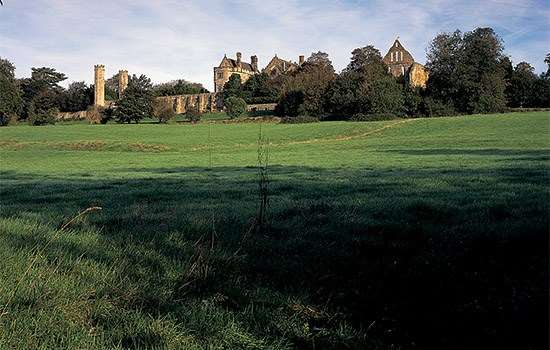
Visit the 1066 Battlefield
Explore the site of the most famous battle in English history – one of the least altered of all medieval battlefields – and visit the abbey founded there by King William I.
-

1066 and the Norman Conquest
Discover more here about the Battle of Hastings itself and its consequences, and find out where you can see some of the spectacular castles and great abbeys the Normans built across the land.
-
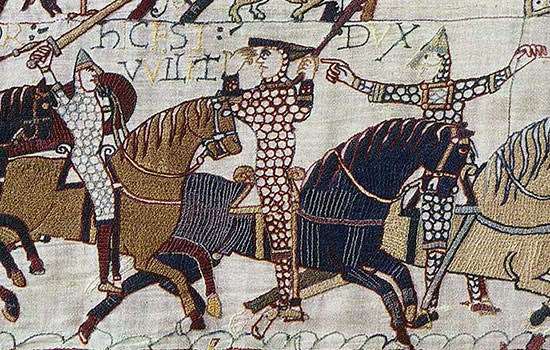
What happened at the Battle of Hastings?
At dawn on Saturday 14 October 1066, two great armies prepared to fight for the throne of England. Read what happened at the most famous battle in English history.