Search Results
176 results for whats on in January
Page
Beeston Castle with its impressive location and natural defences has been home to prehistoric settlers, great Barons and it's even been an important English Civil War stronghold.
Page
Archbishop of York between 1114 and his death in 1140, Thurstan was one of the most significant churchmen of early 12th-century England. New research from English Heritage has revealed that he was also venerated as a saint.
Page
Edith Cavell was a British nurse who, as matron of a hospital in Brussels, enabled hundreds of Allied soldiers to escape the German occupation during the First World War. She was caught, put on trial and shot executed in October 1915. Her death sparked international outrage and she became an important symbol – not only wartime sacrifice, but of forgiveness, too.
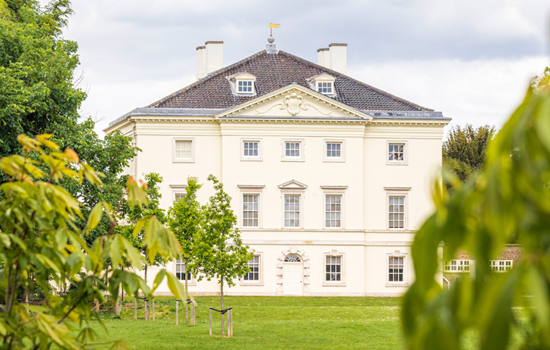
Property
Marble Hill is the last complete survivor of the elegant villas and gardens which bordered the Thames between Richmond and Hampton Court in the 18th century.
Page
English Heritage looks after over 40 public statues and monuments across the capital including London's oldest bronze statue of Charles I, national war memorials such as the Cenotaph and statues commemorating individuals like Florence Nightingale and Sidney Herbert. Use these pages to explore their history.
Page
As well as being Darwin’s family home for 40 years, Down House was where he developed and tested the theories published in his book ‘On the Origin of Species’. The garden was Darwin’s ‘living laboratory’ where he could conduct hundreds of experiments on the natural world. We look at some of these garden experiments and how they informed Darwin’s world-changing ideas.
Page
History of Farleigh Hungerford Castle
A history of Farleigh Hungerford Castle, which was begun in 1383 and was inextricably linked to the fortunes of the Hungerford family.
Page
Use this gallery to explore all the public London statues in the care of English Heritage. They represent various individuals throughout British history including monarchs, from Charles I to Edward VII, nursing heroes Edith Cavell and Florence Nightingale, and explorers Sir John Franklin and Captain Scott.
Page
Commissioned in 1630, the statue of King Charles I which now stands in Trafalgar Square, London, was sculpted by Hubert Le Sueur and intended for the 1st Earl of Portland’s new gardens at Mortlake Park, Roehampton. Charles I was King of England, Scotland and Ireland between 1625 and 1649. He is mostly remembered for his conflicts with parliament which led to the English Civil Wars (1642–51).
Page
Florence Nightingale (1820–1910)
One of the most recognised names in modern British history, Florence Nightingale was a key figure in the development of modern nursing and healthcare practice. Arthur George Walker’s statue of Nightingale shows her as ‘the Lady with the Lamp’, a nicknamed she earned on her nightly inspection rounds in the Crimea.