McINDOE, Sir Archibald (1900–1960)
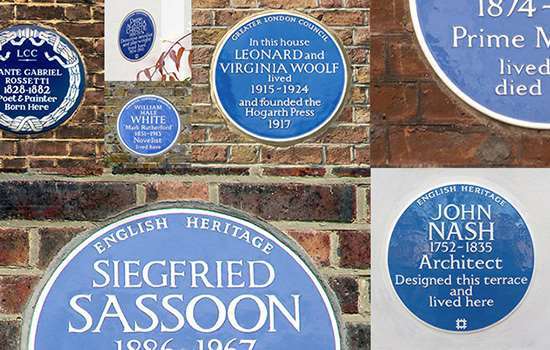
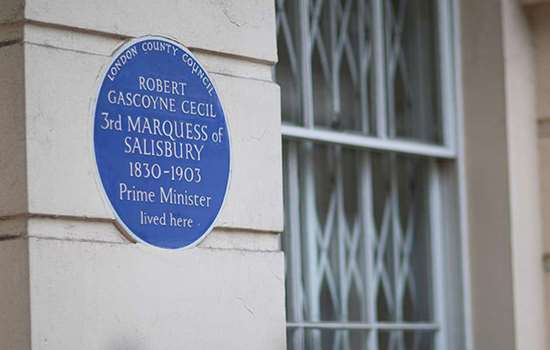
Plaque erected in 2000 by English Heritage at Avenue Court, Draycott Avenue, Chelsea, London, SW3 3BU, Royal Borough of Kensington and Chelsea
All images © English Heritage
Profession
Reconstructive surgeon
Category
Medicine
Inscription
SIR ARCHIBALD McINDOE 1900–1960 Reconstructive Surgeon lived here in flat 14
Material
Ceramic
Reconstructive surgeon Sir Archibald McIndoe restored bodies and morale with his groundbreaking work. A plaque commemorates him at his former home, Avenue Court on Draycott Avenue, Chelsea.
Archibald McIndoe was born in Dunedin, New Zealand, on 4 May 1900. He was awarded prizes for his skill as a medical student at the University of Otago and became the first New Zealand recipient of the Mayo Foundation fellowship, continuing his postgraduate training at the Mayo Clinic in New York.
McIndoe’s ability impressed abdominal surgeon Lord Moynihan, who encouraged him to go to London, but when he arrived in the winter of 1930, there was no job awaiting him as he had expected. Sir Harold Gillies, McIndoe’s cousin, came to his rescue by supporting him to establish a practice. McIndoe became a Fellow of the Royal College of Surgeons of England (FRCS England) in 1932 and surgeon at the Hospital for Tropical Diseases.
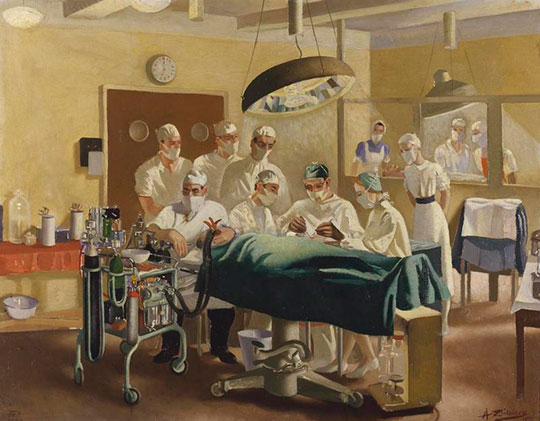
Soon after the outbreak of the Second World War, Gillies arranged for McIndoe to be appointed consultant plastic surgeon to the RAF. McIndoe’s unit – based at East Grinstead Hospital – carried out extensive surgery on some 3,600 airmen who had suffered severe burns. The centre became a model for treatment where McIndoe undertook a series of painstaking operations, remodelling faces and reshaping limbs. His work went beyond the physical, though; he also restored morale and fought for better pay for patients during their rehabilitation.
Post war life and commemoration
In 1941, his patients – the best known of whom was the airman and author Richard Hillary – formed the Guinea Pig Club, which continued to meet and offer group support after the war. McIndoe was knighted in 1947 and was on the council of the Royal College of Surgeons from 1948. He was a founding member of the British Association of Plastic Surgeons and was its president in 1949.
McIndoe lived in Flat 14 of Avenue Court, an imposing apartment building dating from about 1930, in Draycott Avenue, from about 1949 to 1955. After he died on 12 April 1960, McIndoe’s ashes were buried in the Royal Air Force church St Clement Danes; he was the only civilian to receive this honour.
In 2000, on Battle of Britain Day (15 September), many members of the Guinea Pig Club attended the unveiling of McIndoe’s plaque on his former home by his widow, Constance.
Further reading
-
Richard Battle, revised by HCG Matthew, ‘McIndoe, Sir Archibald Hector (1900–1960)’, Oxford Dictionary of National Biography (2004) (access with a UK public library card)
Nearby Blue Plaques
See these places on an interactive Google map.