UNLIMITED ACCESS TO OVER 400 HISTORIC PLACES
Live and breathe the story of England at royal castles, historic gardens, forts and defences, world-famous prehistoric sites and many others.

1066 was a momentous year for England. The death of the elderly English king, Edward the Confessor, on 5 January set off a chain of events that led up to the Battle of Hastings on 14 October – and the Norman Conquest of England.
Discover the story of the Battle of Hastings itself and the huge impact of the Norman Conquest on England.
The Battle of Hastings was fought on 14 October 1066 between the armies of Harold Godwinson, King of England, and Duke William of Normandy (William the Conqueror). The armies were evenly matched, and the battle lasted all day – rare for a medieval battle. When Harold was eventually killed, the way was open for William to assume the throne of England.
Explore the site of the most famous battle in English history – one of the least altered of all medieval battlefields – visit the abbey founded there by King William I, and find out more about the battle.
Visit the Battlefield
At dawn on Saturday 14 October 1066, two great armies prepared to fight for the throne of England. Read what happened at the most famous battle in English history.

Was Battle Abbey built ‘on the very spot’ where King Harold fell, or was the Battle of Hastings actually fought elsewhere? Discover the latest thinking about the battlefield’s location.

Harold’s brief reign was dominated by defending England from invasion. How did it unfold, and did he really march 200 miles from Yorkshire before the Battle of Hastings?

St Augustine’s Abbey in Canterbury was one of the most important monasteries in medieval England. But could it also have been the birthplace of the Bayeux Tapestry?
Watch our new series of shorts on the story of 1066, where we explore what everyday people may have made of the events leading up to, including, and following the Battle of Hastings.
Check back weekly for more episodes!
Watch the series on YouTube ShortsDuke William of Normandy’s triumph at the Battle of Hastings marked the dawn of a new era. In the decades that followed, all aspects of life in England were transformed, from organisation and governance to language and customs – and perhaps most visibly today, architecture.
William and his followers built castles and fortifications across the country to control locals, and impressive religious buildings were built in the Norman era too. You can still see the foundational earthworks and stone structures of some of these buildings today.
Find a Norman site near you using our interactive map that highlights some of the best-preserved Norman architecture in England.
Explore the Norman MapListen to our podcast episodes that explore the events, people and places surrounding the Battle of 1066 and Norman rule.

From simple clubs to fine steel-bladed swords, we take a closer look at the weapons used by the Normans and Saxons, as depicted in the Bayeux Tapestry.

What does the Bayeux Tapestry tell us about Duke William’s fleet of ships, what supplies he took with him, and how his army got their horses on board?

We explore four women who wielded power behind the scenes in 1066, as advisors to their husbands, supporters of their sons and the voice of religious moderation.
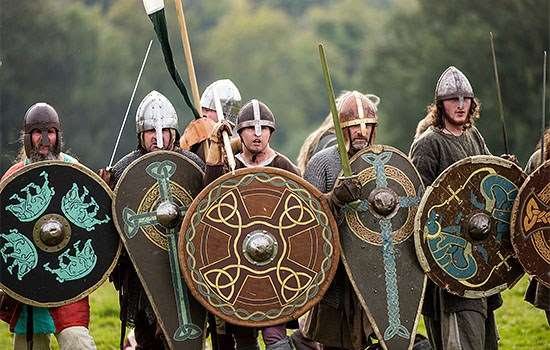
Was William’s victory at the Battle of Hastings a foregone conclusion? Was King Harold really killed by an arrow in his eye? Find quick answers to these and other questions about 1066.