CRAIGIE, Jill (1911–1999)
Plaque erected in 2026 by English Heritage at 66 Pilgrim’s Lane, Hampstead, NW3 1SN, London Borough of Camden
All images © English Heritage
Profession
Filmmaker
Category
Applied Arts, Journalism and Publishing, Philanthropy and Reform, Politics and Administration, Radio and Television
Inscription
JILL CRAIGIE 1911–1999 Film-maker and Writer lived here 1965–1999
Material
Ceramic
Jill Craigie was known for her films, writing and feminism. She is commemorated by a blue plaque at 66 Pilgrim’s Lane, Hampstead, where she lived for 34 years.
Though Jill Craigie later claimed to have been born in 1912 or 1914, her birth certificate shows that she was born on 7 March 1911, and that her original given names were Noreen Joan. She was the elder of two children of a theatre box office clerk and his Russian-born wife. Her parents divorced in 1920, and Craigie attended various schools in the UK and Europe.
Early writing
In the late 1920s and early 1930s Craigie’s various clerical jobs included writing horoscopes and ‘agony aunt’ responses for a magazine; she also worked as a journalist for Hearst Newspapers. She married Claude Begbie-Clench, an assistant producer at Elstree Studios, in 1933 and their daughter Julie was born the next year. The marriage did not last and in 1938 Jill married screenwriter Jeffrey Dell. She also wanted to be a writer and they collaborated on a play, The Judge, which was performed in London in 1938.
Craigie wrote scripts for British Council documentaries, which she found boring, and collaborated with Dell on a screenplay for The Flemish Farm in 1943, which told the story of a heroic Belgian officer. Reviews were positive, but Craigie and Dell’s relationship was at an end and they later divorced.
Feature films
Craigie’s first solo film – Out of Chaos (1943/4), a documentary about wartime artists and critics such as Henry Moore, Stanley Spencer, Paul Nash, Kenneth Clark and Eric Newton – highlighted the importance of art in ordinary people’s lives. It was an accomplishment just to get a film made at this time, but it had limited distribution.
Craigie’s distinctive films blurred genre boundaries, were made in a way that reflected her beliefs about participatory production and wittily addressed major concerns of their time.
The Way We Live (1946) used real-life, participatory and fictional elements to show Plymouth, heavily bombed during the Second World War, being rebuilt to serve the needs of ordinary people – an aim she championed. While making the film, Craigie met Michael Foot, the left-wing Labour MP for Plymouth, and they married a few years later. The Way We Live was the first documentary ever shown at the Cannes Film Festival and was praised by critics. It was then distributed widely and found considerable success, especially in Plymouth.
Craigie’s documentary, Children of the Ruins (1948) depicted UNESCO’s work with children who had been displaced by war. Blue Scar (1949) was set in a Welsh mining village just after nationalisation and mixed real-life footage with a romantic story. Craigie’s political message was noted but the film was not a popular success. To Be a Woman (1951), funded by the National Union of Women Teachers and arguing for equal pay, also had a lukewarm reception. Enthusiasm for documentaries had waned and the British film industry was struggling at this time. However, in 1950, Craigie became the first woman to sit on the management council of the British Film Academy, indicating her high professional standing.
Journalism
Craigie then had a long hiatus from filmmaking and developed a presence as a scriptwriter, a journalist, and a TV and radio personality. She wrote several scripts for films, including The Million Pound Note (1953), starring Gregory Peck; Trouble in Store (1953), a popular Norman Wisdom film (although she apparently withdrew her name from the credits); Windom’s Way (1957); and The Horse’s Mouth (1959).
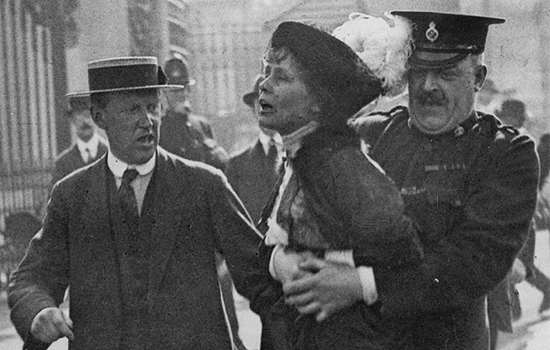
Craigie had long been interested in suffrage, had met many of the original suffragists and collected materials and memories. Her radio play, The Women’s Rebellion: A Dramatised Impression of the Suffragette Movement, aired on 13 March 1951. In the mid-1950s, Lord Beaverbrook gave Craigie an Evening Standard column and she wrote about women’s lives, domestic and paid work, and film and television. When ITV was launched in 1955, she directed film reports on women’s jobs.
66 Pilgrim’s Lane
From 1965, Craigie lived with Michael Foot at what was then 17 Worsley Road, a red brick semi-detached house dating from the 1880s. According to local newspaper the Ham & High, Craigie and Foot were prominent in the campaign to change the name of the street from Worsley Road to Pilgrim’s Lane – a reference to the nickname of Plymouth Argyle FC. This succeeded and in 1968 their house became 66 Pilgrim’s Lane. This was where Craigie hosted famous political dinners – Foot was a cabinet minister in the 1970s and led the Labour Party in the early 1980s. Her ‘salon’ guests included Barbara Castle, Harold Wilson, Randolph Churchill, Sonia Orwell, Stanley Kubrick and Salman Rushdie. Craigie and Foot remained there for the rest of their lives.
In 1967, Craigie wrote and directed two documentaries for the BBC. Keep Your Hair On explored gender roles, and Who Are the Vandals? returned to her interest in urban design, criticising modernist mega-blocks and developments in nearby Camden. She also wrote on town planning in the News Chronicle and The Times.
In the 1970s Craigie returned to the history of suffragism, beginning work on Daughters of Dissent, writing essays and persuading Virago Press to reissue Emmeline Pankhurst’s autobiography. Her knowledge and extensive collection made her a leader on the topic and a magnet for a new generation of feminist scholars. She was also – like Foot – a passionate member of the Campaign for Nuclear Disarmament.
Craigie returned to filmmaking in the early 1990s when, outraged by the West’s failure to intervene in the conflicts that marked the break-up of Yugoslavia, she wrote, directed and produced Two Hours From London to show the extent of the atrocities being committed there. The privately financed film was broadcast by the BBC in 1995 to positive reviews.
Craigie died in London on 13 December 1999.
Further reading
- Hollie Price, ‘Craigie [married names Begbie-Clench, Dell, Foot], Noreen Jean [Jill] (1911–1999)’, Oxford Dictionary of National Biography (2004) (access with a UK public library card)
- The Jill Craigie Archives, The Women’s Library, LSE
Nearby Blue Plaques
See these places on an interactive Google map.